
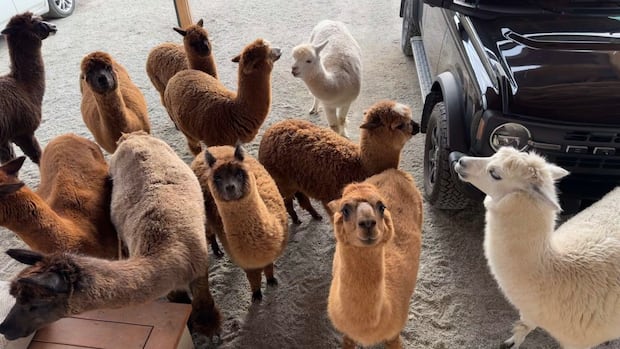

McKenna Robson received distressing news while in Vancouver that the Bald Range wildfire was approaching her alpaca farm in Garnet Valley, one valley away from where the fire started in Faulder. Feeling helpless, she directed an operation remotely to cut fences on her property, giving her 14 alpacas a chance to survive the fast-approaching blaze.
Amid the wildfire emergency, many animal owners faced tough decisions like Robson. Agriculture Minister Lana Popham mentioned that up to 50,000 agricultural animals were at risk from the wildfires. Some owners, like Greg Krautner with his goats, managed to evacuate with their animals, while others, like Leah Gibbs, had to leave their animals behind, causing immense anxiety and uncertainty.
With the situation gradually improving in the evacuated areas, Summerland authorities issued temporary permits to select animal care organizations to assist with livestock in the region. The Animal Lifeline Emergency Response Team (ALERT) has been actively responding to requests to care for various animals in the Okanagan, ranging from horses to lizards.
Daryl Meyers from ALERT highlighted the resilience of animals left behind, noting how they respond positively to volunteers’ care and attention. Meyers emphasized the importance of owners being prepared for evacuations with their animals, including having crates or trailers ready and practicing loading animals in case of emergencies.
Despite the challenges, all of Robson’s alpacas survived the fire, with the animals either fleeing the property or finding refuge in a pond. Robson, after briefly returning to the burnt-out area, shared that her alpacas, though scared, managed to make it through the ordeal.