
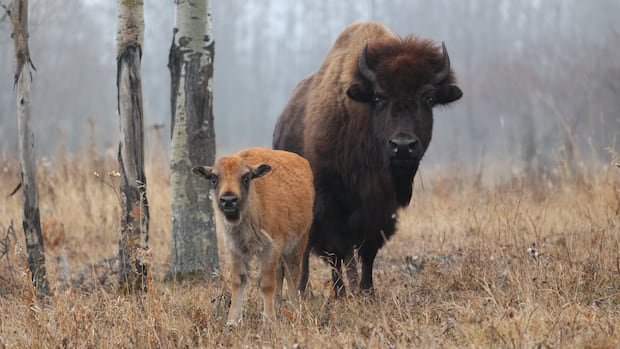

In the past, bison roamed across North America in massive herds with rust and auburn fur before being nearly wiped out due to human activities.
New research focusing on bison DNA sheds light on how the species has been impacted by the decline in population and the gradual return of herds to their original habitats.
The study, detailed in the journal Science, involved analyzing 160 bison genomes spanning 20,000 years, with the contributions of about 40 scientists, including many from Canada.
Headed by paleogeneticist Jonas Oppenheimer, the research was carried out at the Paleogenomics Lab at the University of California, Santa Cruz, known for its work on ancient DNA extracted from fossil remains.
The research aims to inform modern conservation efforts by understanding the bison’s genetic history, potentially aiding in their future survival.
Once well-connected across North America, bison are now found in isolated populations managed with care, posing challenges to their resilience due to genetic fragmentation.
Oppenheimer noted that historic bison populations were genetically similar, unlike today’s herds, which show significant genetic variations due to past near-extinction events caused by human actions.
Evolutionary Insights
By sequencing bison genomes, scientists mapped how the species’ genetic diversity has changed over time, combining DNA from ancient bones and current herds.
Samples were collected from managed herds in Canada and the U.S., as well as from wild herds in various locations, with ancient DNA sourced from collections in multiple countries.
The study involved sequencing 115 ancient bison genomes and 45 modern ones, along with previously sequenced data, resulting in the most extensive genetic map of bison to date.
Chris Jass of the Royal Alberta Museum mentioned the study’s importance in applying ancient fossils to modern conservation practices, emphasizing collaboration in such research.
The research highlighted how the bison population’s genetic structure and diversity were impacted by historical population declines.
Historical Changes
Historically, bison freely roamed North America, maintaining a uniform gene pool for millennia until their numbers dramatically decreased due to hunting and government actions in the late 19th century.
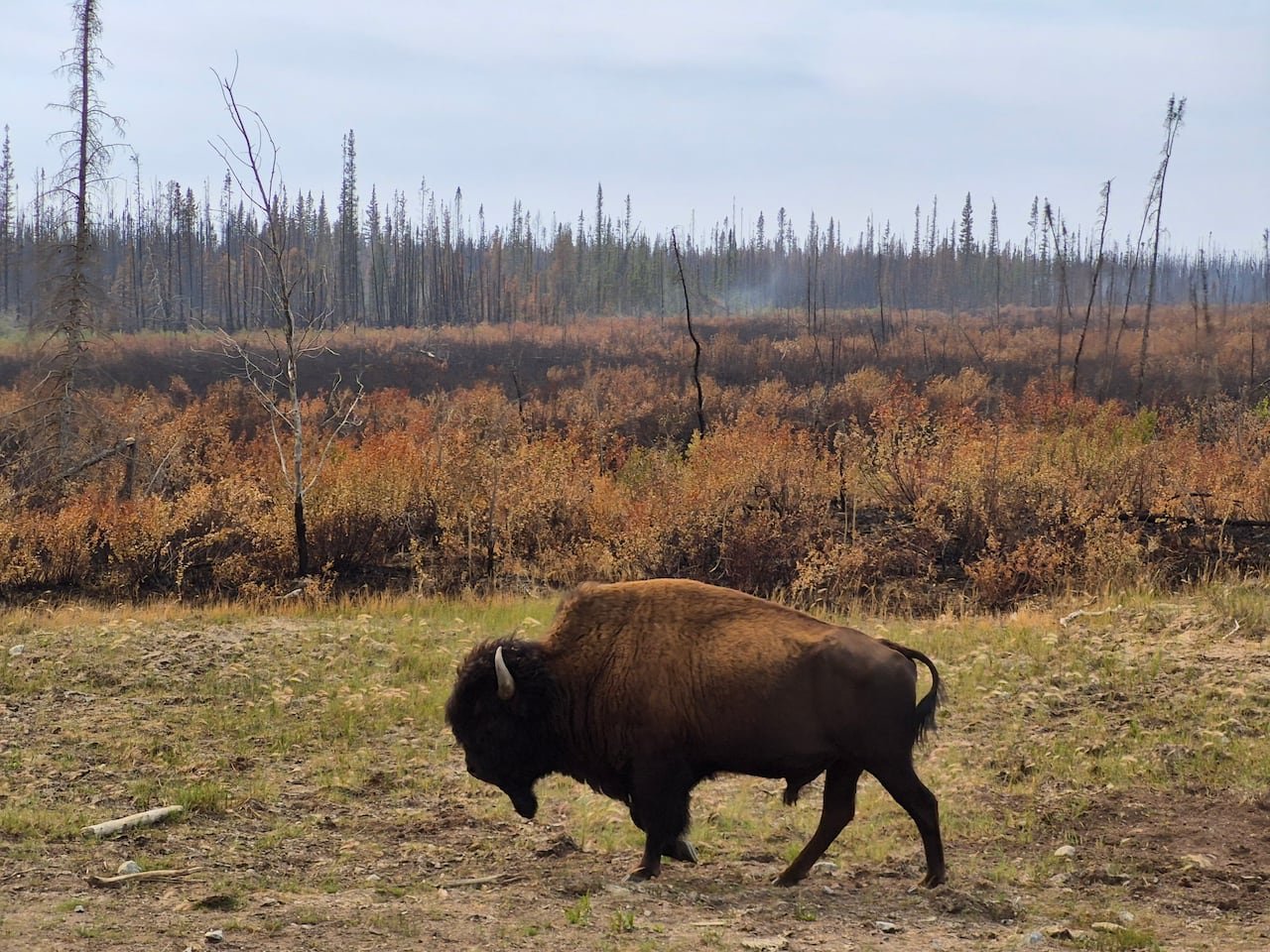
A wood bison bull walks near a recently burned area in Mackenzie, Northwest Territories. (Greg Wilson/Parks Canada)
Despite the initial decline, genetic diversity remained intact initially due to the widespread nature of bison populations. However, modern herds now exhibit isolated genetic signatures due to recent events.
The study revealed that many bison have minimal cattle ancestry, with wood bison and plains bison showing significant genetic distinctions adapted to different environments.
The divergence between wood and plains bison around 3,000 years ago was influenced by changing climates, with subsequent human actions leading to intermixing between the subspecies.
Greg Wilson, a bison geneticist, emphasized the importance of managing the species separately based on the study’s results, supporting efforts to conserve distinct subspecies.
<h2 class="