
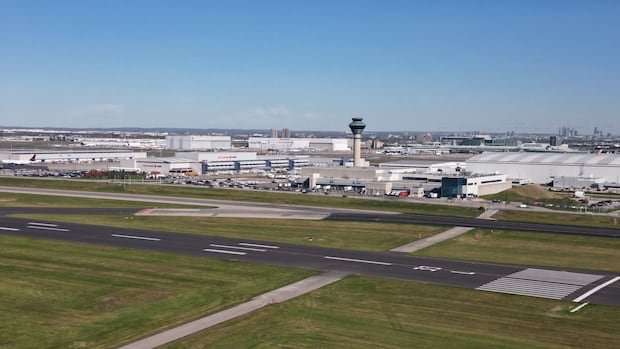

Prime Minister Mark Carney expressed his desire on Tuesday for private investors to assume control of operations at the four major airports in Canada located in Toronto, Montreal, Calgary, and Vancouver. This proposal, announced during a government-led investment summit in Toronto, aims to maintain the federal government’s ownership of airport land and assets while enabling a shift in spending towards smaller regional airports. Carney believes this change could lead to reduced costs for travelers at these locations.
Currently, the operational structure of Canadian airports involves private, not-for-profit airport authorities leasing airports from the federal government and managing all aspects of the facilities, including runway maintenance and terminal operations. These airport authorities operate independently financially, setting their own fees to cover operating costs.
Under Carney’s plan, investors would be allowed to manage airports for specific lease durations, with Transport Canada retaining regulation and oversight responsibilities. Karen Hennessey, a partner at Gowling WLG’s business law group in Ottawa, emphasized that legislative adjustments would likely be necessary to implement Carney’s proposal effectively. The model would resemble a concession agreement, outlining expectations for service quality, public safety, costs, and employee management.
Private airport operations are relatively uncommon in North America but are more prevalent in other regions worldwide. According to a study in the Journal of Air Traffic Management, over half of the top 100 busiest airports in 2018 had some level of private sector involvement. Carney highlighted Canadian pension plans’ existing investments in foreign airports and emphasized the desire to leverage that experience domestically.
The Australian Competition and Consumer Commission’s research on airport privatization revealed potential price increases for passengers when airports become privatized local monopolies. While enhanced infrastructure spending may lead to higher costs, overall satisfaction with services remains positive. A University of Alberta study from 2023 indicated that privately operated airports tend to operate more efficiently, with improved customer satisfaction despite slightly higher fees.
Response to the privatization discussions has been mixed within the Canadian airport community. The head of Toronto’s Pearson airport expressed openness to private-sector investments while emphasizing the success of the current public ownership model in managing expansions. The Canadian Airports Council adopted a cautious stance, emphasizing the importance of aligning investment talks with growth and affordability for travelers.
Opposition parties such as the NDP and Bloc Québécois have voiced strong objections to Carney’s plan, citing concerns about increased costs for travelers. Conservative Leader Pierre Poilievre called for transparency in policy details to ensure fair outcomes for Canadians. Previous attempts to privatize Canadian airports, proposed during former Prime Minister Justin Trudeau’s tenure, faced challenges and ultimately did not proceed due to mixed feedback and lack of demonstrated benefits.