
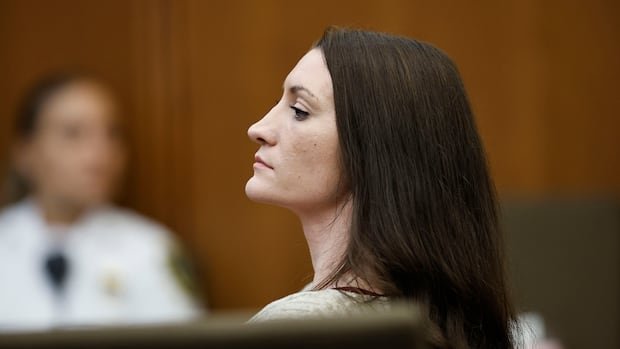

Testimony wrapped up on Wednesday in the trial of Lindsay Clancy, a mother facing charges for the deaths of her three young children, shedding light on postpartum mental health issues. The closing arguments are set for Thursday, followed by jury deliberations.
Clancy, aged 36, has entered a plea of not guilty by reason of lack of criminal responsibility, citing postpartum psychosis as the reason for the tragic incident where she allegedly strangled her kids – five-year-old Cora, three-year-old Dawson, and eight-month-old Callan – in their Duxbury, Massachusetts home in January 2023. Postpartum psychosis, a rare mental condition, is associated with the challenges of postpartum experiences like stress, sleep deprivation, and hormonal fluctuations.
According to prosecutors, Clancy premeditated the actions and comprehended the wrongfulness of her deeds. Throughout the five-week trial, Clancy did not take the stand, while the defense presented 10 witnesses, including acquaintances and family members. In contrast, the prosecution called over 70 witnesses, including her former spouse.
During the final rebuttal testimony, Dr. Gregory Saathoff, a forensic psychiatrist from the University of Virginia and a senior FBI Behavioral Analysis Unit psychiatrist, discredited Clancy’s claim of a commanding voice instructing her to commit the heinous act. Dr. Saathoff highlighted the absence of specific directives given by the voice, indicating Clancy’s control and decision-making in carrying out the tragic events swiftly and methodically in her home basement while her husband was away.
In a challenging cross-examination, defense attorney Kevin Reddington questioned Dr. Saathoff’s expertise in postpartum psychosis, hinting at potential bias due to his affiliations with law enforcement agencies. Reddington also emphasized Clancy’s efforts to seek help for postpartum depression, suicidal thoughts, and fears of harming her children, suggesting that she was aware of her struggles and actively sought assistance.
The case has provoked online discussions, with various theories circulating on social media platforms, adding complexity to an already tragic narrative. The trial’s intense focus on postpartum mental health challenges the legal system to navigate delicate issues surrounding maternal mental well-being and the complexities of such cases.