
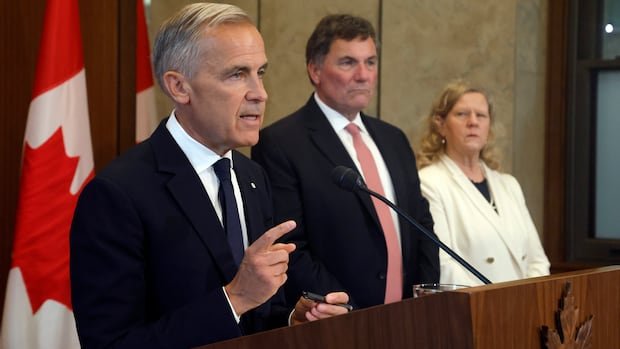

After a tumultuous week filled with tension and uncertainty, Prime Minister Mark Carney stepped forward on Saturday morning to elucidate the reasons behind rejecting what he referred to as a “poor deal” and to shed light on the next steps to be taken.
“Canada has been engaged in dedicated and sincere negotiations with the United States for over a year to establish a new, all-encompassing trade agreement,” stated Carney. “Our approach has been practical, patient, and unwavering.”
However, the terms put forth by American negotiators at the eleventh hour were deemed by Carney as “unjust, economically unsound, and a threat to the credibility of any potential agreement,” as conveyed in a statement issued just before midnight on Friday.
Moments earlier, U.S. Trade Representative Jamieson Greer informed journalists during a conference call that Canada had opted not to finalize the deal.
While the acceptance of an undisclosed pact remains uncertain, former Canadian chief negotiator Steve Verheul reportedly expressed concerns that Canada may have conceded too much. Former foreign affairs minister Chrystia Freeland also voiced apprehensions that acquiescing to U.S. tariffs could detrimentally position Canada in future negotiations.
The implementation of new tariffs by the U.S. is predicted to have significant repercussions, potentially resulting in the loss of up to 90,000 Canadian jobs, according to economist Trevor Tombe from the University of Calgary.
Janice Charette, the current chief negotiator for Canada, cautioned her American counterparts that imposing additional tariffs could escalate tensions and hinder the negotiation process.
The current scenario leaves Canadian and American officials in a precarious position akin to a suspended situation, with uncertainties looming over the future outcomes.
In an interview with the New York Times in July, a senior official from the Trump administration highlighted the evolving nature of American foreign policy, emphasizing that the U.S. cannot be taken for granted in global affairs.
The fluctuating dynamics in trade agreements and geopolitical relationships suggest a shift towards a more transactional approach, underscoring the necessity for recalibrating international partnerships to align with evolving American policies.
The unfolding events indicate a significant departure from past practices, marking a new era characterized by trade protectionism and power dynamics.
The aftermath of the failed negotiations poses critical questions regarding the future trajectory of Canada-U.S. relations and the potential for re-engagement in talks.
Prime Minister Carney acknowledged the change in the American stance and emphasized the need for a recalibrated approach to foster a reliable economic partnership.
As both countries navigate the aftermath of the collapsed negotiations, the focus remains on mitigating the impact on businesses, implementing countermeasures against U.S. tariffs, and exploring avenues for potential future dialogues.
The looming specter of retaliatory actions and counter-tariffs underscores the complexities of the current situation and raises uncertainties about the path ahead.
While the sentiment of “no deal is better than a bad deal” prevails, the challenges of navigating a scenario without a negotiated agreement present formidable obstacles for both Canadian and American stakeholders.