
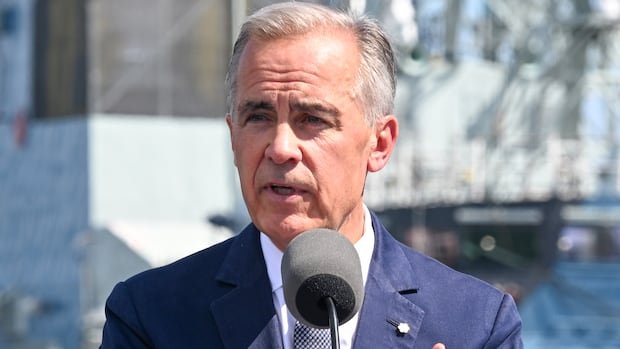

Prime Minister Mark Carney expressed his willingness to resume negotiations with the Trump administration once the U.S. shows genuine interest in an economic partnership and stops treating Canada as inferior. Carney emphasized the importance of a fair and equal partnership between the two countries during his remarks in Lévis, Que., on Monday. He acknowledged the existing trade agreement between Canada and the U.S. (CUSMA) but stressed the need for enhancements to benefit all parties involved. Carney criticized the U.S.’s approach of threatening Canadian businesses and citizens, stating that Canada would not accept being treated as a subordinate to the United States.
Carney made it clear that Canada walked away from the negotiating table on Friday night due to last-minute unfair demands imposed by the U.S. that would have negatively impacted Canada’s trade flexibility and linguistic requirements. The introduction of 50 per cent tariffs on approximately $28 billion worth of Canadian exports to the U.S. over the weekend further escalated tensions.
Addressing President Trump’s recent tariff threats on Canadian automotive and steel imports, Carney characterized the U.S.’s intentions as detrimental to Canadian industries and unsustainable in the long run. He highlighted the importance of remaining composed and exploring strategic responses to such provocations.
Ontario Premier Doug Ford suggested imposing surcharges on electricity exports to the U.S. as a potential response to Trump’s tariffs. Carney echoed the sentiment, emphasizing Canada’s vital role in supplying energy and industrial products to the U.S. Despite the escalating trade disputes, Carney announced significant funding for Quebec’s shipbuilding industry to construct new icebreakers for the Canadian Coast Guard, showcasing ongoing efforts to strengthen Canada’s economy.
While Carney outlined specific conditions for Canada’s return to the negotiation table, U.S. Vice President JD Vance indicated ongoing talks and a commitment to a respectful process. The diplomatic tensions between the two countries were further emphasized by Vance’s critical remarks about Canada’s trade policies and military investments.