
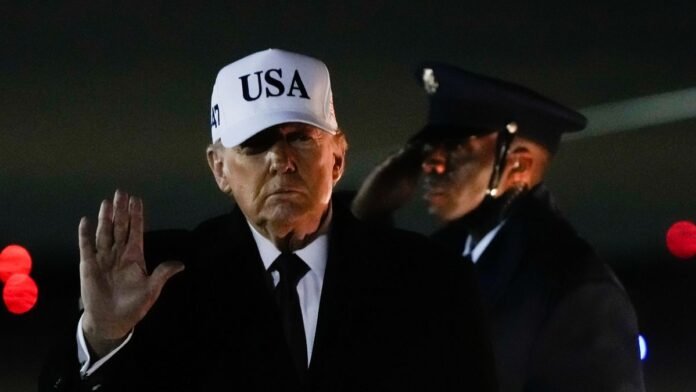

President Donald Trump of the United States reportedly decided to halt plans for a strike on Iran due to doubts about the operation’s success. However, the possibility of an attack remains pending further intelligence updates from Iran. Concerns about potential retaliation from Iran-backed groups in Lebanon, Yemen, and Iraq, as well as the challenge of targeting key regime facilities, may have influenced the decision.
The complexity of identifying regime leaders’ locations amidst heightened security measures poses a significant obstacle to carrying out precise strikes. Trump’s unpredictable behavior adds a layer of uncertainty to the situation, as he has a history of making strong statements but not always following through.
Monitoring real-time developments in Iran is challenging, with outdated footage complicating the assessment of ongoing protests. Speculation arises about the fate of opposition groups amid crackdowns. Despite Trump’s acceptance of assurances from the Iranian regime, skepticism remains regarding their credibility.
Efforts are underway to gather accurate information on the ground in Iran, likely leading to a future response from the U.S. If violence escalates, Trump has warned of a forceful reaction. Failure to act decisively in the face of suspected atrocities could weaken Trump’s position and embolden Iran’s actions against dissent.
The situation in Iran remains fluid, with external support potentially shaping the course of events. Trump’s willingness to engage with Iran’s leadership raises questions about the effectiveness of his strategy. As tensions persist, the international community awaits the unfolding developments in Iran with a mix of concern and anticipation.