
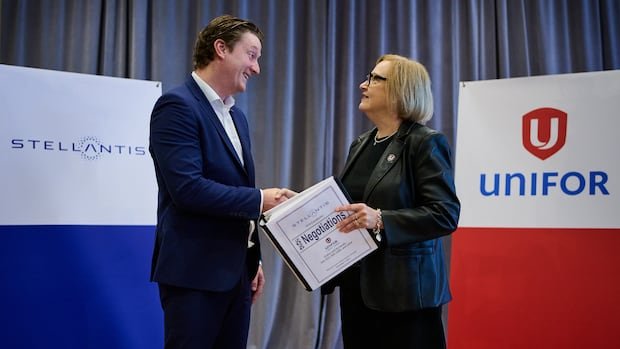

Unifor, the union representing Stellantis workers, has cautioned the U.S. automaker against undervaluing its Canadian workforce as contract negotiations commenced on Tuesday. This round of talks signifies the final phase of Unifor’s discussions with the Detroit Three automakers, following a pattern bargaining approach to establish negotiation terms. Despite recent successful agreements with Ford Motor Co. and General Motors in Canada, Unifor’s National President Lana Payne highlighted the upcoming negotiations as the most formidable yet, emphasizing concerns over job security post more than 2,000 layoffs at Stellantis’ Brampton assembly plant.
The negotiation deadline is set for September 11, with a primary focus on preserving jobs amid the plant’s closure speculation. Stellantis had previously considered shutting down and selling the facility, initially intended for Jeep production but later halted, leaving the plant dormant. Payne reiterated the importance of maintaining Jeep Compass production in Brampton, labeling the relocation as an erroneous decision.
Stellantis emphasized the significance of the labor discussions for its future, acknowledging the evolving industry landscape due to trade challenges. The company underlined its substantial investments in Canadian operations since 2022, aiming to enhance manufacturing capabilities and promote battery technology in Ontario. Stellantis expressed optimism in reaching a sustainable agreement with Unifor during negotiations.
The ongoing talks occur amidst U.S. tariffs impacting the auto sector, with potential tariff increases threatening the industry. Payne highlighted the critical need for Canada to safeguard its auto sector against escalating tariffs, emphasizing the repercussions of heightened trade tensions. Unifor’s efforts extend beyond bargaining with Stellantis, as they advocate at the federal level against trade agreements that could jeopardize the Canadian auto industry.
Recent contract ratifications with General Motors saw Unifor members supporting new agreements, with wage increases and provisions mirroring those secured with Ford. Unifor’s commitment to upholding industry standards and safeguarding Canadian auto jobs remains paramount as negotiations progress.
With the automotive landscape in flux, Unifor’s stance reflects a broader effort to protect the Canadian auto industry against external pressures and uncertainties. The union’s dedication to securing fair agreements and advocating for industry sustainability underscores the pivotal role of labor negotiations in shaping the sector’s future.