
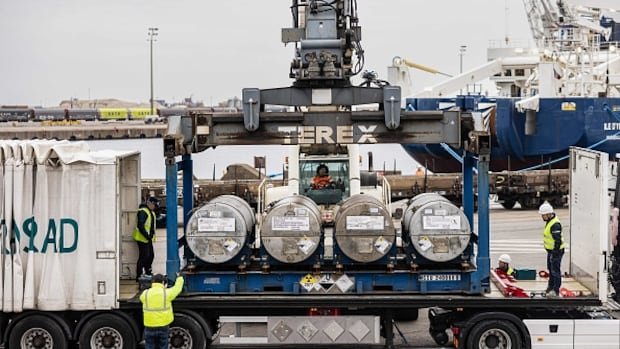

Amid Russia’s military presence at Ukraine’s major nuclear facility and assaults on the nation’s power networks, European and U.S. reliance on Russian nuclear fuel for their electricity remains evident. One of the recipients of Russian low enriched uranium (LEU) for American nuclear reactors, according to shipping data examined by CBC’s investigative program, is Canadian-owned Westinghouse Electric.
The U.S. prohibited Russian enriched uranium imports in August 2024 to reduce dependence on Russian material and enhance domestic fuel supply. However, waivers under the Prohibiting Russian Uranium Imports Act allow exceptions if alternative LEU sources are unavailable or if import is deemed in the national interest, with waivers set to expire by January 1, 2028.
In 2025 alone, the U.S. imported approximately 400 tonnes of low enriched uranium from Russia valued at around $1 billion US, with major recipients including subsidiaries of French-owned nuclear company Framatome, U.S. nuclear fuel supplier Global Nuclear Fuel Americas, and Westinghouse.
While the EU has no ban on Russian enriched uranium imports, and Canada has not sanctioned business dealings with Russia’s Rosatom or Tenex, concerns have been raised about the ongoing conflict in Ukraine and the need to reduce dependency on Russian nuclear cooperation.
Analysis of shipping data between Westinghouse and Tenex indicates the ongoing export of uranium from Russia to Westinghouse’s South Carolina plant. Westinghouse, majority-owned by Brookfield Renewable Partners, is a significant player in the U.S. nuclear sector, with plans for substantial investments in nuclear projects.
Efforts to reduce reliance on Russian enriched uranium have been ongoing, with the U.S. and Europe aiming to bolster domestic production. Despite this initiative, Russia remains a major supplier of enriched uranium globally, necessitating a gradual transition to alternative sources over time.
In light of the conflict in Ukraine and concerns about supporting Russian state entities, there are calls for Western companies, including Canadian firms, to avoid engaging with Rosatom or its subsidiaries. The importance of diversifying nuclear fuel sources and reducing dependence on Russian nuclear cooperation has become a pressing issue for Western nations.
Support for Ukraine’s energy needs has seen agreements between companies like Cameco and Energoatom, aiming to provide alternative sources of nuclear fuel and support the country’s energy independence. The focus remains on transitioning away from Russian nuclear fuel sources and bolstering domestic capabilities in the nuclear energy sector.