
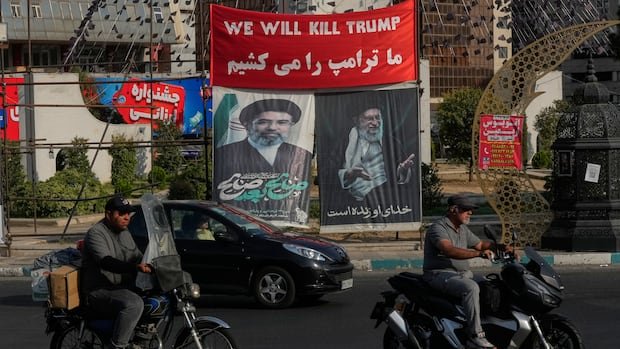

In an uncommon interview with Western media, Brig.-Gen. Mohammad Reza Naqdi, a key adviser to Iran’s Islamic Revolutionary Guard Corps (IRGC), indicated that Iranian officials have observed a perceived weakness in the American military compared to their previous assessments since the U.S. and Israel initiated an attack on Iran earlier this year. As negotiations to halt the conflict remain at a standstill, Naqdi expressed that Iran has not yet achieved its ultimate goal when questioned about the war’s outcome.
Naqdi, serving as the supreme adviser to the IRGC’s commander-in-chief, emphasized that despite ongoing challenges, Iran considers itself victorious thus far and anticipates continued success in the future. The existing interim agreement between Washington and Tehran, designed to bring an end to the hostilities, was established in mid-June and is scheduled to expire soon.
Recent remarks from Naqdi come following a breakdown in the ceasefire, leading to a series of exchanges between the U.S. and Iran before a temporary pause was implemented. Reflecting on the conflict, Naqdi highlighted the learning opportunities gained from experiencing a real war and adapting to combat strategies against the U.S., stating, “We have also seen how the American military is weaker than what we perceived.”
President Donald Trump reiterated the U.S.’s control over the Strait of Hormuz, underscoring their naval strength in a recent social media post. Since the commencement of the Persian Gulf conflict triggered by coordinated military actions by the U.S. and Israel against Iran, Trump has vacillated between escalation threats and claims of nearing a peace agreement.
Meanwhile, Pakistani officials are actively engaged in facilitating peace talks between Iran and the U.S. Pakistan’s Foreign Minister Ishaq Dar held discussions with Iranian Ambassador Reza Amiri Moghadam in Islamabad, following Interior Minister Mohsin Naqvi’s visit to Tehran for high-level dialogues. The ongoing negotiations have encountered challenges, particularly concerning Iran’s control over the vital shipping route in the Strait of Hormuz, a critical passageway for global oil trade.
As both Iran and the U.S. escalate rhetoric, the pressure mounts to reach a final agreement within the agreed timeframe outlined in the June ceasefire pact. Notably, Iran’s stance on maintaining control over the Strait of Hormuz remains firm unless its conditions for ending the conflict are met, while Trump has demanded compensation from Iran for past casualties and conflicts.